
What is HIIT and Why is it Effective?
HIIT, or high-intensity interval training, delivers maximum results in minimal time, making it ideal for busy schedules and beginner fitness journeys.
Effectively burning calories and improving cardiovascular health, HIIT workouts alternate between intense bursts of activity and brief recovery periods.
This approach boosts metabolism and enhances endurance, offering a highly efficient path to fitness, even with readily available PDF plans.
Understanding High-Intensity Interval Training
HIIT isn’t just about pushing yourself to the limit; it’s a strategically structured workout method. It revolves around short periods of intense exercise, performed at 80-95% of your maximum effort, followed by equally important recovery phases. These recovery periods, whether active (light jogging or walking) or complete rest, allow your body to partially recover before the next high-intensity interval.
The beauty of HIIT lies in its adaptability. Beginner PDF workout plans often start with work-to-rest ratios like 30 seconds of work followed by 60 seconds of rest. As fitness improves, these ratios can be adjusted to increase the challenge. This progressive overload is key to continued improvement.
Unlike steady-state cardio, HIIT doesn’t require hours at the gym. A typical HIIT session, even utilizing a beginner-friendly PDF, can be completed in as little as 20 minutes, making it a time-efficient option for those with busy lifestyles. The efficiency stems from the ‘afterburn effect’ – excess post-exercise oxygen consumption – where your body continues to burn calories even after the workout is over.
Benefits of HIIT for Beginners
HIIT offers a surprisingly accessible entry point into fitness, even for those new to exercise. Beginner PDF workout plans are designed to build a foundation of strength and endurance gradually, minimizing the risk of injury. One significant benefit is improved cardiovascular health; HIIT efficiently strengthens your heart and lungs.
Beyond cardio, HIIT boosts metabolism, aiding in weight management and calorie burning – even at rest. This makes it a powerful tool for achieving fitness goals. Many beginner PDFs focus on bodyweight exercises, eliminating the need for expensive gym equipment.
Furthermore, HIIT’s time efficiency is a major draw. Short, intense workouts fit easily into busy schedules. The variety offered in PDF plans keeps workouts engaging and prevents plateaus. It’s a fantastic way to torch calories and build fitness, regardless of your current level.
HIIT vs. Traditional Cardio
While traditional cardio involves sustained effort at a moderate intensity, HIIT alternates between short bursts of intense activity and brief recovery periods. Beginner PDF workout plans demonstrate this contrast effectively. Traditional cardio excels at building endurance, but HIIT often delivers comparable cardiovascular benefits in less time.
HIIT’s intermittent nature creates an “afterburn effect,” meaning your body continues to burn calories even after the workout is complete – a benefit less pronounced with steady-state cardio. Many PDF guides highlight this metabolic advantage.
For beginners, HIIT, when approached with a well-structured PDF plan, can be more manageable than long cardio sessions. It’s also more versatile, easily adaptable to various exercises and fitness levels. Ultimately, both have merit, but HIIT offers a time-efficient and potentially more impactful approach.

Preparing for Your First HIIT Workout
Proper preparation is key for a safe and effective HIIT experience, especially when utilizing a beginner PDF workout plan; prioritize warm-ups and listen to your body.
Warm-up Exercises (5-10 minutes)
Before diving into a HIIT workout, even one from a beginner PDF plan, a thorough warm-up is absolutely crucial. This prepares your muscles and cardiovascular system for the intensity ahead, minimizing the risk of injury and maximizing performance.
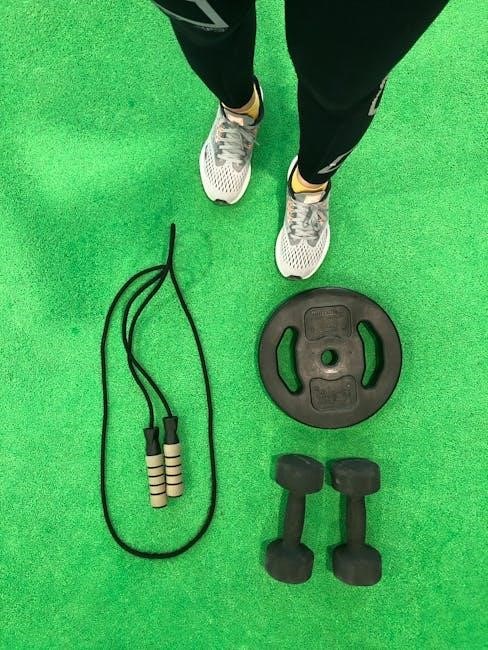
Begin with 5 minutes of light cardio, such as jogging in place, high knees, or jumping jacks – performed at a low intensity. Follow this with dynamic stretching, focusing on movements that mimic the exercises in your HIIT routine.
Examples include arm circles, leg swings, torso twists, and walking lunges. These movements increase blood flow to the muscles and improve range of motion. A proper warm-up shouldn’t leave you fatigued, but rather primed and ready to tackle the challenges of your HIIT session.
Don’t skip this step – it’s an investment in your workout and your body!
Essential Equipment (Minimal Requirements)
One of the greatest advantages of HIIT, particularly when following a beginner PDF workout plan, is its accessibility. You truly don’t need a fully equipped gym to get started and experience significant benefits. In fact, minimal equipment is often all that’s required.
Comfortable athletic shoes are the most important investment – providing support and cushioning during high-impact movements. Beyond that, a yoga mat can be helpful for floor exercises, offering cushioning and grip.
Resistance bands are a fantastic, affordable addition for increasing intensity, but are entirely optional. Water bottle and a towel are also recommended to stay hydrated and manage sweat. Forget expensive gadgets; your bodyweight is your primary tool!
Focus on proper form, and you’ll be well on your way.

A Beginner-Friendly HIIT Workout Plan (PDF Focus)
PDF-based HIIT plans offer structured routines for beginners, simplifying workout implementation and progression. They provide clear guidance for effective, safe training.
Workout Structure: Work/Rest Ratios
HIIT’s core lies in alternating between high-intensity work periods and recovery intervals. For beginners utilizing a PDF workout plan, understanding these ratios is crucial for success and injury prevention. A common starting point is a 1:2 work-to-rest ratio – for example, 30 seconds of intense exercise followed by 60 seconds of rest or low-intensity activity.
As fitness improves, these ratios can be adjusted to increase the challenge; progressing to 1:1 or even 2:1 ratios. PDF guides often provide pre-designed ratios, simplifying the process. It’s vital to prioritize proper form during work intervals, even if it means slowing down. The rest period isn’t inactivity; it’s active recovery – light jogging or walking to keep blood flowing and prepare for the next burst. Consistency with these ratios, guided by your PDF, builds endurance and maximizes results.
Sample HIIT Workout Routine (20 Minutes)
This 20-minute routine, easily found within many beginner-friendly HIIT PDF workout plans, is a great starting point. Begin with a 5-minute warm-up (see Cool-Down section for ideas). Then, alternate between these exercises: 30 seconds of Jumping Jacks, followed by 60 seconds of rest. Next, 30 seconds of Bodyweight Squats, then 60 seconds rest. Continue with 30 seconds of Push-Ups (modified on knees if needed), and 60 seconds rest.
Repeat this circuit three times. Finish with 5 minutes of cool-down exercises. Remember to consult your PDF for visual demonstrations of proper form. Adjust the work/rest ratio if needed, prioritizing technique over speed. This routine is designed to be adaptable; a PDF might offer variations to increase or decrease intensity based on your fitness level. Listen to your body and stay hydrated!

HIIT Exercises for Beginners
HIIT workouts utilize simple, bodyweight exercises like squats, push-ups, and jumping jacks, often detailed in beginner PDF guides for easy access.
Butt kicks are also effective, providing a low-impact cardio option readily available within downloadable PDF workout plans.
Bodyweight Squats
Bodyweight squats are a foundational HIIT exercise, perfect for beginners and frequently featured in PDF workout plans due to their accessibility. They require no equipment, making them ideal for home workouts, and effectively target major muscle groups – quads, hamstrings, and glutes.
To perform a squat, stand with feet shoulder-width apart, toes slightly outward. Lower your hips as if sitting into a chair, keeping your back straight and core engaged. Ensure your knees track over your toes and don’t extend past them. Many beginner HIIT PDFs emphasize proper form to prevent injury.
Beginners can modify by performing shallow squats or using a chair for support. As fitness improves, aim for deeper squats. Incorporating squats into HIIT routines builds lower body strength and endurance, contributing to overall fitness gains, as outlined in numerous downloadable PDF guides.
Push-Ups (Modifications for Beginners)
Push-ups are a classic HIIT exercise building upper body strength, often included in beginner PDF workout routines. However, full push-ups can be challenging for those new to fitness. Fortunately, several modifications make them accessible.
Knee push-ups are an excellent starting point. Performing push-ups with your knees on the ground reduces the amount of body weight lifted, making the exercise easier. Maintain a straight line from head to knees, engaging your core throughout the movement. Many HIIT PDFs demonstrate this variation.
Incline push-ups, using a wall or elevated surface, further decrease the difficulty. As strength increases, gradually lower the incline. Proper form – a straight back and controlled descent – is crucial. Beginner HIIT PDFs often prioritize form over repetitions, ensuring safe and effective training.
Jumping Jacks
Jumping jacks are a fundamental cardio exercise frequently featured in beginner HIIT workout plans, often readily available as PDF downloads. They require no equipment and are excellent for warming up the entire body before more intense intervals.
To perform a jumping jack, start with your feet together and arms at your sides. Jump while simultaneously spreading your legs apart and raising your arms overhead. Return to the starting position and repeat. Focus on maintaining a controlled rhythm and landing softly to minimize impact.
Beginner HIIT PDFs often incorporate jumping jacks as a primary exercise during work intervals, typically lasting 30-60 seconds. Modifications, like stepping one leg out at a time, can reduce intensity. Prioritize proper form to prevent injuries and maximize effectiveness.
Butt Kicks

Butt kicks are a dynamic stretching and cardio exercise commonly included in HIIT routines, particularly those designed for beginners and often found in downloadable PDF workout plans. This exercise effectively warms up the hamstrings and glutes while elevating your heart rate.
To execute butt kicks, jog in place while actively bringing your heels up towards your glutes with each step. Maintain an upright posture and pump your arms naturally. Focus on a quick, controlled movement, aiming to touch your heels to your bottom.
Many beginner HIIT PDFs utilize butt kicks as a work interval exercise, typically for 30-45 seconds. If the impact is too high, a slower pace or modified version can be implemented. This exercise is great for both cardio and strengthening leg muscles.

Cool-Down and Recovery
Cool-down exercises and proper recovery are crucial post-HIIT, especially for beginners following a PDF plan, to reduce muscle soreness and improve flexibility.
Cool-down Exercises (5-10 minutes)
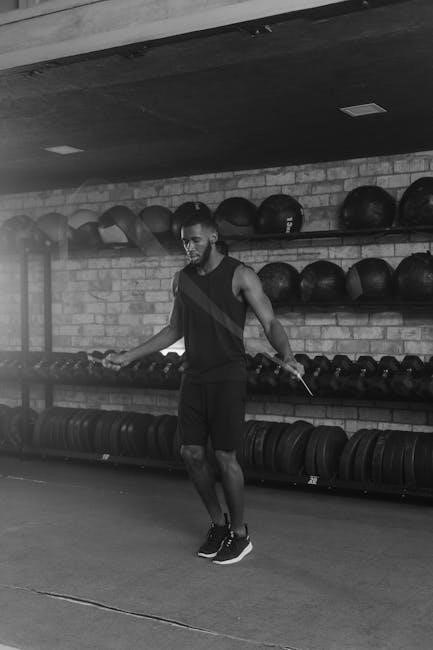
Following a beginner HIIT workout, particularly one sourced from a PDF plan, dedicating 5-10 minutes to a cool-down is paramount for a safe and effective recovery. This isn’t merely about slowing down; it’s about gradually returning your heart rate and breathing to resting levels, preventing dizziness and reducing muscle soreness.
Begin with light cardio, such as walking in place or a slow jog, for 2-3 minutes. This helps flush lactic acid from your muscles. Then, incorporate static stretches, holding each stretch for 20-30 seconds. Focus on the muscle groups heavily used during your HIIT session – legs (hamstrings, quads, calves), glutes, and core.
Examples include hamstring stretches (seated or standing), quad stretches (holding your foot towards your glutes), calf stretches (leaning against a wall), and torso twists. Remember to breathe deeply throughout each stretch, promoting relaxation and flexibility. A well-executed cool-down significantly contributes to your overall fitness journey and prepares you for your next workout.
Importance of Post-Workout Nutrition
After completing a HIIT workout, even one following a beginner-friendly PDF plan, replenishing your body with the right nutrients is crucial for recovery and maximizing results. Your muscles have glycogen stores depleted during intense exercise, and protein is essential for muscle repair and growth.
Aim to consume a combination of protein and carbohydrates within 30-60 minutes post-workout. This “window of opportunity” allows for optimal nutrient absorption. Good options include a protein shake with fruit, Greek yogurt with berries and granola, or a small chicken breast with sweet potatoes.
Prioritize lean protein sources and complex carbohydrates. Hydration is also key – replenish fluids lost during exercise with water or an electrolyte drink. Proper post-workout nutrition isn’t about indulgence; it’s about fueling your body for recovery and continued progress.

Finding and Utilizing HIIT Workout PDFs
Numerous online resources offer beginner-friendly HIIT workout PDFs, providing structured plans for effective training. Carefully evaluate sources for credibility and suitability.
Downloadable PDFs offer convenience and guidance, ensuring a focused approach to your fitness journey, even with limited time.
Reliable Sources for Beginner HIIT PDFs
Finding trustworthy HIIT workout PDFs is crucial for a safe and effective beginner experience. Several reputable websites and fitness professionals offer downloadable plans specifically designed for those new to high-intensity interval training.
Websites like NerdFitness and PopSugar Fitness consistently provide well-structured, beginner-level HIIT routines in PDF format. These resources often include detailed exercise descriptions and modifications, catering to varying fitness levels.
YouTube channels, such as FitnessBlender, frequently link to accompanying PDF workout plans in their video descriptions. This allows for visual guidance alongside a printable workout schedule.
Always prioritize sources that emphasize proper form and offer modifications for exercises. Look for PDFs created by certified fitness trainers or organizations with a strong reputation in the health and wellness industry. Be cautious of overly aggressive or complex plans when starting out.
Remember to cross-reference information and listen to your body throughout your HIIT journey.
Customizing PDF Workouts to Your Fitness Level
Downloaded HIIT workout PDFs should be viewed as templates, not rigid prescriptions. Adapting the plan to your current fitness level is essential for preventing injury and maximizing results. Beginners should prioritize modifications and gradual progression.
Start by reducing the work interval duration and increasing the rest periods. For example, if a PDF suggests 30 seconds of work, begin with 20 seconds and a longer recovery.
Modify exercises to lower-impact variations. Swap jumping jacks for step-outs, and perform push-ups against a wall or on your knees.

Focus on maintaining proper form over speed or intensity. As your strength and endurance improve, gradually increase the work intervals and decrease rest times;
Listen to your body and don’t hesitate to take extra rest days when needed.