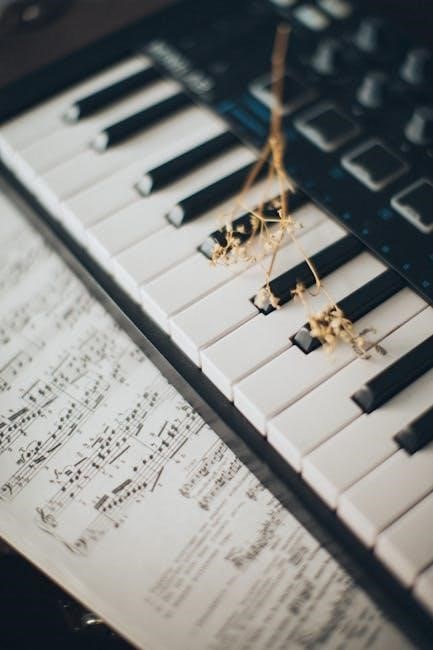
Beginner piano PDFs offer accessible learning, featuring resources like John Thompson’s course and free sheet music, ideal for initial instruction and practice․
What is a “Piano for Beginners PDF”?
A “Piano for Beginners PDF” represents a digital document designed to introduce individuals to the fundamentals of playing the piano․ These PDFs often encompass beginner piano books, like John Thompson’s Easiest Piano Course, readily available for download․
They provide structured lessons, covering note reading, rhythm, and basic techniques․ Furthermore, many websites offer free beginner sheet music in PDF format, allowing learners to practice immediately․ These resources offer a convenient and cost-effective way to start a musical journey․

Understanding the Piano Keyboard
The piano keyboard features repeating patterns of white and black keys, representing musical notes; mastering this layout is crucial for beginner piano study․
White Keys and Note Names (A, B, C, D, E, F, G)
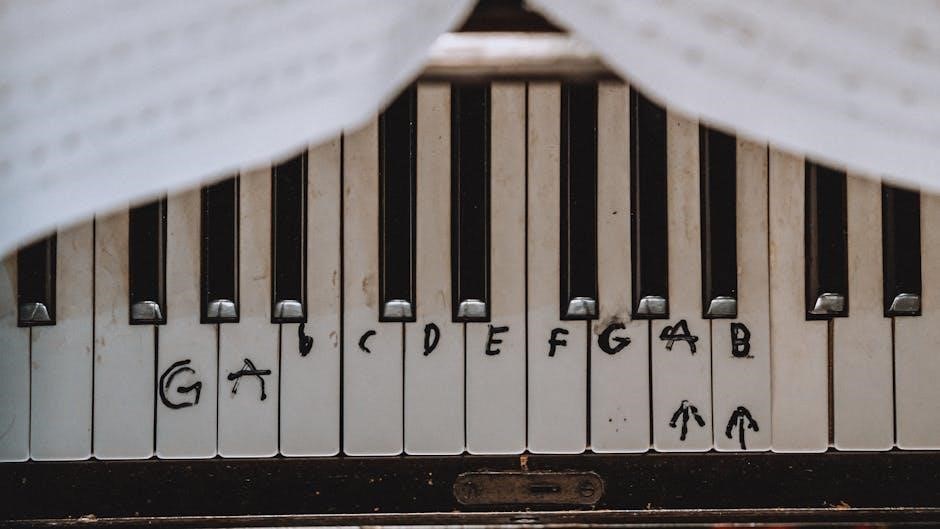
Understanding the white keys is foundational for any piano beginner․ These keys represent the natural notes: A, B, C, D, E, F, and G, repeating across the keyboard․ Recognizing this pattern is essential for reading music and building a solid musical base․
The arrangement is logical; C is always to the left of the two black keys, providing a crucial landmark for orientation․ Beginner PDFs often emphasize this relationship, helping students quickly identify and memorize the note names․ Consistent practice associating notes with their physical location is key․
Black Keys: Sharps and Flats
Black keys introduce the concepts of sharps and flats, altering the pitch of white key notes․ They exist in groups of two and three, providing visual cues on the keyboard․ A sharp (#) raises a note by a half step, while a flat (♭) lowers it․
For example, the black key between C and D can be called C# (C sharp) or D♭ (D flat)․ Beginner PDFs often illustrate this duality, emphasizing that the same key has two names․ Mastering sharps and flats unlocks more complex musical possibilities․
Basic Music Notation
Music notation, including the staff, clef, and notes, is fundamental for reading piano music found in beginner PDFs, enabling accurate playing․
The Staff, Clef, and Notes
The musical staff comprises five lines and four spaces, defining note pitches․ A clef, typically treble or bass, assigns these lines and spaces to specific notes․ Notes themselves represent pitch and duration, visually indicating which key to press and for how long․
Beginner piano PDFs heavily rely on understanding these elements․ Learning to identify notes on the staff—A, B, C, D, E, F, and G—is crucial for decoding sheet music and progressing in piano studies․ Mastering this foundation unlocks musical literacy․
Rhythm and Time Signatures
Rhythm dictates the timing of notes, creating musical flow․ Time signatures, like 4/4, indicate beats per measure and the note value receiving one beat․ Beginner piano PDFs emphasize rhythmic patterns and counting․
Understanding these concepts is vital for playing in time and accurately interpreting sheet music․ PDFs often include exercises to develop rhythmic precision․ Mastering rhythm alongside note reading forms the core of musical performance and comprehension․

Finding Free Piano PDFs
Numerous websites provide free beginner piano PDFs, including popular books like John Thompson’s, and sheet music for easy songs, aiding self-paced learning․
Popular Beginner Piano Books Available as PDFs (e․g․, John Thompson’s Easiest Piano Course)
Several well-regarded piano methods are readily available as PDFs, offering structured lessons for newcomers․ John Thompson’s Easiest Piano Course is a classic, progressively introducing music theory and technique․ Other options include beginner books from Andersonstown Music School, and resources focusing on simplified arrangements․
These PDFs often contain exercises, familiar tunes, and clear explanations, making them excellent starting points for independent study or supplementing lessons․ Accessing these materials digitally provides convenience and cost-effectiveness for aspiring pianists․
Websites Offering Free Beginner Piano Sheet Music PDFs
Numerous websites provide free, downloadable piano sheet music in PDF format, catering to beginners․ These resources feature simplified arrangements of popular songs and classical pieces․ Discover arrangements setting a quality standard, including selections like Swan Lake solos and duets with lyrics for beginner students․
Exploring these online libraries allows aspiring pianists to practice with diverse repertoire without financial investment, fostering enjoyment and skill development․ Remember to check licensing and copyright before use․
Essential Beginner Piano Techniques
Proper hand position, posture, and finger numbering are crucial for beginners․ Consistent exercises build foundational skills, enabling correct technique and musical expression․
Correct Hand Position and Posture
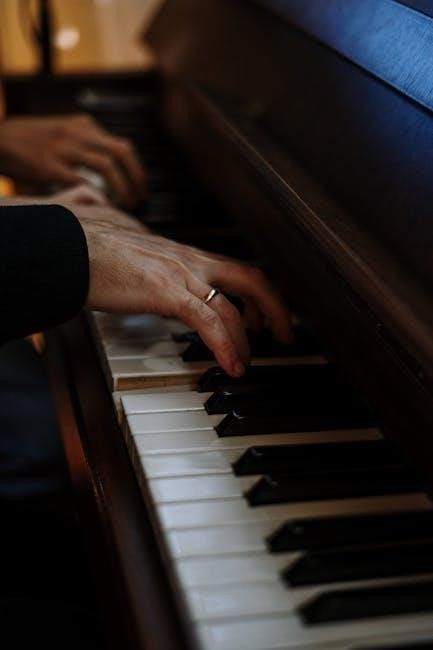
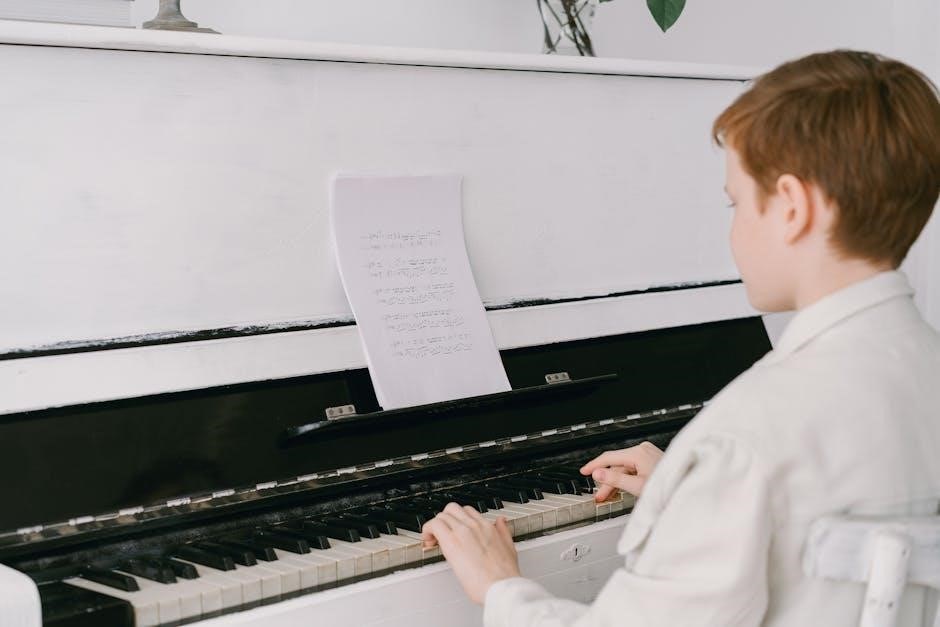
Maintaining correct posture and hand position is fundamental for beginner pianists․ Sit upright with relaxed shoulders and a comfortably curved spine․ Hands should form a natural ‘C’ shape, as if holding a small ball․
Avoid tension in wrists and arms; flexibility is key․ Fingers should be curved and strike the keys with the pads, not the tips․ Proper alignment prevents strain and facilitates efficient playing, allowing for greater control and musicality as skills develop․
Finger Numbering and Exercises
Standard finger numbering is crucial: Thumb is 1, index finger 2, middle finger 3, ring finger 4, and pinky finger 5․ Beginner PDFs often include exercises to build finger strength and independence․
Simple scales and arpeggios, played slowly and deliberately, are excellent starting points․ Focus on evenness and clarity of tone․ Consistent practice with these exercises develops dexterity and coordination, forming a solid foundation for more complex pieces․

Types of Pianos
Pianos come in acoustic and digital forms․ Classical pianos offer rich sound, while digital pianos provide versatility and features for beginner practice․
Acoustic Pianos (Classical Pianos)
Classical pianos, renowned for their beautiful and soothing sounds, represent the traditional piano experience․ These instruments utilize an acoustic, stringed mechanism to produce tones, often described as soft and high-pitched․ Historically, legendary musicians composed masterpieces on these pianos, establishing a rich legacy․
While offering exceptional sound quality, acoustic pianos require regular tuning and are less portable than digital alternatives․ For beginners, the investment can be significant, but the authentic feel and tone are invaluable․
Digital Pianos and Keyboards
Digital pianos and keyboards provide a versatile and often more affordable entry point for beginners․ Offering features like adjustable volume, headphone compatibility for silent practice, and diverse instrument sounds, they cater to various learning styles․
Unlike acoustic pianos, digital options require no tuning and are easily portable․ While the feel may differ, advancements in key action technology closely mimic the experience of playing a traditional piano, making them excellent learning tools;
Learning Resources & Apps
Apps like Simply Piano supplement PDF learning, offering interactive lessons and feedback, though evaluating pros, cons, and subscription models is crucial for beginners․
Simply Piano App: Pros and Cons
Simply Piano provides a gamified learning experience, offering immediate feedback on accuracy and rhythm, making practice engaging for beginners utilizing PDF resources․ Pros include its user-friendly interface and structured lessons․ However, cons involve subscription costs and potential limitations in teaching advanced techniques․
Accessing a permanent version can be challenging, and reliance solely on the app might hinder understanding traditional music notation found in many beginner piano PDFs․ It’s best used as a supplement, not a replacement, for comprehensive learning․
Reading Piano Sheet Music
Sheet music utilizes key signatures and rhythmic values, essential for interpreting beginner piano PDFs; understanding these elements unlocks musical expression and accurate playing․
Understanding Key Signatures
Key signatures, found at the beginning of piano sheet music PDFs, indicate sharps or flats, defining the tonal center of a piece․ These symbols simplify notation by avoiding repeated accidentals․ Learning to quickly identify key signatures is crucial for beginner pianists, enabling accurate note reading and a deeper understanding of musical structure․
Recognizing common key signatures—like C major (no sharps or flats) or G major (one sharp)—builds confidence and fluency․ Mastering this skill allows beginners to focus on rhythm and expression, rather than constantly deciphering individual notes․
Decoding Rhythmic Values
Rhythmic values in piano PDFs dictate how long each note is held․ Understanding whole, half, quarter, and eighth notes—and their corresponding rests—is fundamental․ Beginners often start with simple time signatures like 4/4, where the top number indicates beats per measure․
Practice counting rhythms aloud and clapping along with piano sheet music PDFs․ This builds internal timing and coordination․ Accurate rhythm is as important as playing the correct notes, creating a musical and enjoyable performance․
Practice Tips for Beginners
Consistent practice, even in short bursts, is key․ Set realistic goals and utilize beginner piano PDFs for structured exercises, fostering steady progress․
Setting Realistic Goals
Beginner piano learning, aided by readily available PDF resources, thrives on achievable milestones․ Avoid overwhelming yourself; start with mastering basic hand position and simple melodies․ Focus on consistent, short practice sessions rather than lengthy, infrequent ones․
Utilize beginner piano PDFs to break down complex pieces into manageable sections․ Celebrate small victories – successfully playing a scale or a short phrase – to maintain motivation․ Remember, progress isn’t always linear, and patience is crucial for long-term success․
Consistent Practice Schedule
Utilizing piano PDFs for beginners demands a regular practice routine․ Even 15-30 minutes daily yields better results than sporadic, longer sessions․ Schedule practice like any other important appointment, protecting that time․
Consistency builds muscle memory and reinforces learned concepts․ Beginner piano PDFs provide material for structured practice․ Vary your routine – scales, exercises, and pieces – to prevent boredom and promote well-rounded development․ A predictable schedule fosters discipline and accelerates progress․
Piano Maintenance Basics
Maintaining your piano, even while using beginner piano PDFs, involves regular cleaning and considering periodic tuning to preserve sound quality and longevity․
Keeping Your Piano Clean
Regular cleaning is crucial, even when starting with beginner piano PDFs․ Dust the exterior with a soft cloth, avoiding harsh chemicals that can damage the finish․ For the keys, gently wipe with a slightly damp (not wet!) cloth․
Avoid placing food or drinks near the piano to prevent spills․ Consistent dusting prevents buildup, preserving the instrument’s appearance and ensuring a pleasant playing experience as you progress through your lessons and PDF materials․
Tuning Considerations
Regular tuning is vital, even alongside beginner piano PDFs․ New pianos need tuning several times in the first year due to string settling․ Acoustic pianos drift out of tune with temperature and humidity changes․
While beginners may not immediately notice, consistent tuning ensures accurate pitch and develops a good ear․ Digital pianos don’t require traditional tuning, but checking the sound periodically is still recommended for optimal learning․
Choosing a Piano (Buyer’s Guide)
Selecting a piano, alongside beginner piano PDFs, involves considering acoustic versus digital options, budget, space, and features like weighted keys for realistic practice․
Factors to Consider When Purchasing a Piano
When selecting a piano, especially alongside utilizing beginner piano PDFs for learning, several key factors come into play․ Budget is paramount, determining whether an acoustic or digital piano is feasible․ Space constraints often favor digital pianos due to their compact size․
Consider the key action; weighted keys mimic the feel of an acoustic piano, crucial for developing proper technique․ Research brands like those discussed in The Piano Book for reliable quality․ Finally, think about future needs – will the instrument suffice as skills progress?
Renzo Piano and Piano Design (Historical Context)
Renzo Piano’s architectural innovations, though not directly tied to beginner piano PDFs, reflect a broader history of design influencing musical instrument creation․
Influence of Piano Design on Architecture
While seemingly disparate, the intricate mechanics and aesthetic considerations of piano design have subtly influenced architectural thought․ The piano’s soundboard, for example, demonstrates sophisticated acoustic engineering, mirroring concerns in concert hall design․ Renzo Piano’s work, known for structural transparency, echoes the exposed inner workings of a piano․
Furthermore, the piano’s form – a blend of precision and artistry – parallels architectural aspirations․ Though beginner piano PDFs focus on learning, understanding the instrument’s history reveals a connection to broader design principles․

Advanced Beginner Concepts
Progressing beyond basics, explore chords and scales—fundamental building blocks for musical expression, often found within comprehensive beginner piano PDF resources․
Chords, formed by playing multiple notes simultaneously, are essential for enriching piano music beyond single melodies․ Beginner piano PDF materials often introduce basic triads – major, minor, and diminished – as foundational elements․
Understanding chord construction, involving root, third, and fifth intervals, unlocks harmonic possibilities․ Many resources demonstrate simple chord progressions, enabling beginners to accompany melodies and create fuller arrangements․
Practicing chord changes smoothly is crucial, and piano PDF guides frequently include exercises to develop this skill, paving the way for more complex musical pieces․
Scales and Arpeggios
Scales and arpeggios are fundamental exercises in piano PDF learning, building finger dexterity and understanding key signatures․ Scales establish melodic patterns within a key, while arpeggios break chords into sequential notes․
Beginner resources typically start with C major, due to its lack of sharps or flats, gradually introducing other keys․ Consistent practice improves technique and musicality․
Piano PDF materials often include fingering suggestions for efficient execution, aiding in smooth transitions and accurate note playing, essential for future musical development․