Rotator Cuff Strengthening Exercises with Resistance Bands: A Comprehensive Guide
Discover effective rotator cuff exercises utilizing resistance bands‚ often found in downloadable PDF guides‚ to rebuild strength and function after injury.
What is the Rotator Cuff?
The rotator cuff isn’t a single muscle‚ but a group of muscles and tendons surrounding the shoulder joint. These structures are crucial for shoulder stability‚ enabling a wide range of motion‚ and preventing dislocation. Injuries to this area are surprisingly common‚ particularly among individuals whose professions or hobbies involve repetitive arm movements – think painters‚ athletes‚ or even those frequently reaching overhead.
Understanding the rotator cuff’s function is key when considering rehabilitation‚ and resistance band exercises‚ often detailed in readily available PDF guides‚ play a vital role in restoring strength and function. These exercises target the specific muscles‚ helping to rebuild stability and alleviate pain‚ ultimately improving everyday activities.
Anatomy of the Rotator Cuff Muscles
The rotator cuff comprises four primary muscles: supraspinatus‚ infraspinatus‚ teres minor‚ and subscapularis. Each muscle contributes uniquely to shoulder movement and stability. The supraspinatus initiates arm abduction (lifting the arm away from the body)‚ while the infraspinatus and teres minor handle external rotation. The subscapularis internally rotates the arm.
Effective rehabilitation‚ often outlined in resistance band exercise PDF guides‚ focuses on strengthening each muscle individually. Resistance bands allow targeted training‚ mimicking natural shoulder movements and promoting balanced muscle development. Understanding this anatomy is crucial for performing exercises correctly and maximizing recovery potential.
Common Rotator Cuff Injuries
Rotator cuff injuries frequently include tendinitis‚ bursitis‚ and tears – ranging from partial to full thickness. Tendinitis involves inflammation of the tendons‚ causing pain with movement. Bursitis affects the fluid-filled sac (bursa) cushioning the shoulder‚ leading to discomfort and limited range of motion. Tears occur when the tendons rupture‚ potentially requiring surgical repair.
Many rehabilitation programs‚ detailed in resistance band exercise PDF guides‚ begin with gentle exercises to reduce inflammation and restore mobility. Strengthening exercises‚ utilizing bands‚ progressively rebuild muscle strength and stability‚ aiding recovery and preventing re-injury. Early intervention is key.
Causes of Rotator Cuff Injuries
Rotator cuff injuries commonly stem from overuse‚ repetitive motions‚ and age-related degeneration. Individuals involved in sports requiring overhead movements – like baseball or tennis – are particularly susceptible. Occupations demanding frequent arm elevation‚ such as painting or construction‚ also increase risk.
As we age‚ tendons lose elasticity and blood supply‚ making them more prone to tearing. Sudden impacts‚ like falls‚ can also cause acute injuries. PDF guides focusing on resistance band exercises often emphasize preventative strengthening to address muscle imbalances and improve shoulder stability‚ mitigating these risk factors.

Benefits of Resistance Band Training for Rotator Cuff
Resistance bands offer a safe‚ effective way to rehabilitate and strengthen the rotator cuff‚ often detailed in accessible PDF exercise guides for all fitness levels.
Why Choose Resistance Bands?
Resistance bands present a compelling alternative to traditional weights for rotator cuff rehabilitation‚ frequently outlined in comprehensive PDF exercise guides. They provide a unique form of resistance – accommodating resistance – meaning the force increases as the band stretches‚ mirroring the natural strength curve of the shoulder muscles. This is particularly beneficial for rebuilding strength post-injury.
Unlike dumbbells‚ bands are lightweight and portable‚ making them ideal for home exercise programs detailed in downloadable PDFs. They’re also incredibly versatile‚ allowing for a wide range of exercises targeting all rotator cuff muscles. Furthermore‚ bands minimize stress on the shoulder joint‚ reducing the risk of re-injury‚ a crucial consideration when following a PDF rehabilitation plan. They’re a fantastic option for corrective exercises and building foundational strength.
Accessibility and Affordability
One of the most significant advantages of resistance band training‚ often detailed in readily available rotator cuff exercise PDF guides‚ is its accessibility. You don’t require a fully equipped gym or expensive weights to begin a strengthening program. Bands are easily obtainable online or at most sporting goods stores‚ making rehabilitation convenient for everyone;
Furthermore‚ resistance bands are remarkably affordable compared to dumbbells or gym memberships. This cost-effectiveness makes them an ideal choice for individuals seeking a budget-friendly solution for shoulder rehabilitation‚ as outlined in many free or low-cost PDF resources. They empower individuals to take control of their recovery without substantial financial investment‚ promoting consistent exercise adherence.
Progressive Resistance
A key principle of effective rehabilitation‚ often emphasized in rotator cuff exercise PDF guides‚ is progressive resistance. Resistance bands inherently facilitate this by offering varying levels of tension. As your strength improves‚ you can easily increase the challenge by switching to a band with greater resistance‚ ensuring continued muscle development.
Many PDF guides detail specific progressions‚ outlining when and how to advance. This gradual increase in difficulty prevents plateaus and minimizes the risk of re-injury. Unlike fixed-weight dumbbells‚ bands allow for subtle adjustments‚ tailoring the exercise to your precise capabilities. This adaptability is crucial for a safe and effective recovery journey‚ as detailed in comprehensive PDF resources.

Essential Resistance Bands for Rotator Cuff Exercises
PDF guides highlight selecting the correct band type and resistance level for optimal rotator cuff strengthening‚ crucial for effective rehabilitation and injury prevention.
Types of Resistance Bands (Loop vs. Flat)
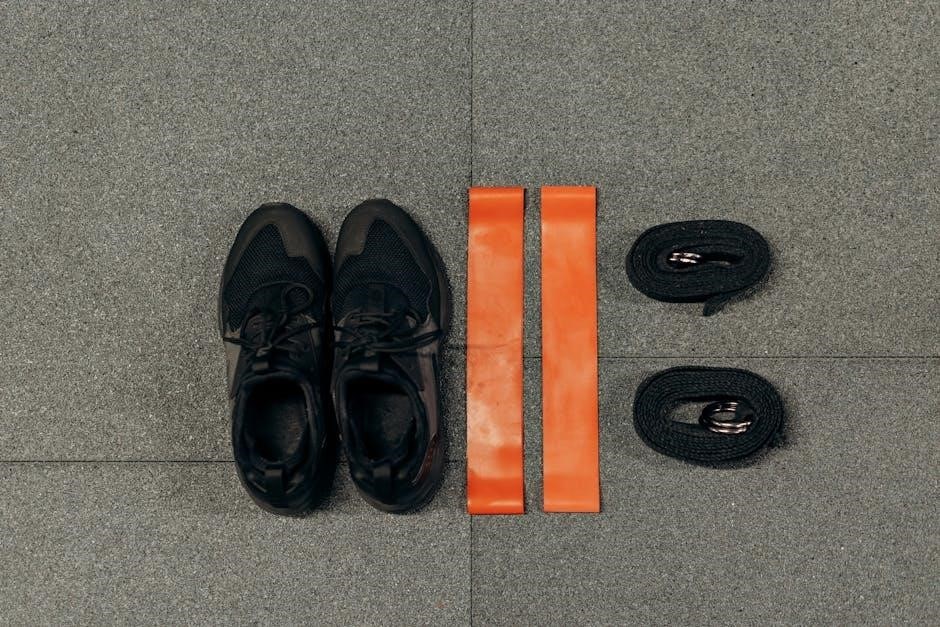
Resistance bands come in two primary forms: loop bands and flat bands‚ each offering unique advantages for rotator cuff exercises as detailed in many PDF guides. Loop bands‚ also known as mini-bands‚ are continuous loops ideal for exercises targeting hip and leg muscles‚ but also useful for external rotations. They provide consistent tension throughout the range of motion.
Flat bands‚ conversely‚ are longer and can be tied into loops or used as a single strand. This versatility makes them excellent for exercises like rows and scaption‚ allowing for adjustable resistance and grip positions. PDF resources often demonstrate how to secure flat bands for various anchor points‚ maximizing exercise effectiveness. Choosing between the two depends on the specific exercises and individual preferences‚ but both are valuable tools for rotator cuff rehabilitation.
Choosing the Right Resistance Level
Selecting the appropriate resistance level is crucial for effective and safe rotator cuff strengthening‚ often detailed within comprehensive PDF exercise guides. Beginners should start with light resistance‚ allowing for controlled movements through the full range of motion without pain. The goal is to feel moderate muscle fatigue by the end of each set‚ not strain.
Resistance bands typically come color-coded‚ indicating varying levels of tension. As strength improves‚ gradually progress to higher resistance levels. PDF guides frequently suggest a progression scheme‚ such as increasing resistance when you can comfortably perform the target repetitions with good form. Prioritize proper technique over using a band that’s too challenging‚ preventing potential injury.
Where to Purchase Resistance Bands
Resistance bands are widely available‚ making them accessible for following rotator cuff strengthening exercises detailed in PDF guides. Major sporting goods retailers like Dick’s Sporting Goods and Academy Sports + Outdoors consistently stock a variety of bands.
Online marketplaces such as Amazon offer an extensive selection‚ often with customer reviews to aid your decision. Pharmacies like CVS and Walgreens sometimes carry lighter resistance bands‚ suitable for initial rehabilitation. Physical therapy clinics may also sell bands recommended by professionals. When purchasing‚ consider a set with varying resistance levels to facilitate progression as outlined in your chosen PDF guide.

Warm-up Exercises Before Starting
Prepare your shoulders with dynamic stretches and light cardio‚ enhancing blood flow before performing rotator cuff exercises from your PDF guide.
Dynamic Stretching for Shoulder Mobility
Before diving into resistance band exercises – as detailed in your rotator cuff PDF guide – prioritize dynamic stretching to prepare your shoulder joint. These movements aren’t held; instead‚ they involve controlled repetitions through a full range of motion. Arm circles‚ both forward and backward‚ are excellent for warming up the muscles.
Cross-body arm swings gently loosen the shoulder capsule. Wall slides‚ where you press your forearms against a wall while sliding them up and down‚ improve scapular mobility. These stretches increase blood flow‚ enhance flexibility‚ and reduce the risk of injury during your strengthening routine. Remember to perform each stretch smoothly and avoid any sharp pain‚ ensuring optimal shoulder preparation before using resistance bands.
Light Cardio for Blood Flow
Complementing dynamic stretches – often outlined in a rotator cuff exercise PDF – incorporate light cardio to further prepare your shoulder for resistance band work. This increases blood flow to the muscles‚ enhancing their elasticity and reducing injury risk.
Simple activities like arm bikes‚ jumping jacks (modified if needed)‚ or even brisk walking for five to ten minutes are sufficient. The goal isn’t to exhaust yourself‚ but to elevate your heart rate and warm up the tissues. Increased blood flow delivers vital oxygen and nutrients‚ optimizing muscle performance during your strengthening exercises. This foundational step‚ alongside stretching‚ sets the stage for a safe and effective workout.
Rotator Cuff Strengthening Exercises with Resistance Bands
Resistance band exercises‚ detailed in many rotator cuff PDF guides‚ effectively target injured muscles‚ offering accessible rehabilitation and strength building for all levels.
External Rotation
Execution: Secure a resistance band to a stable object at elbow height. Keeping your elbow tucked into your side‚ slowly rotate your forearm outwards‚ away from your body. Maintain a 90-degree angle at the elbow throughout the movement. Many rotator cuff exercise PDF guides emphasize controlled motion.
Focus: This exercise primarily targets the infraspinatus and teres minor muscles‚ crucial for external rotation and shoulder stability. Proper form‚ as illustrated in downloadable guides‚ prevents compensation from other muscle groups.
Repetitions/Sets: Begin with 2-3 sets of 10-15 repetitions. PDF resources often suggest starting with lighter resistance and gradually increasing it as strength improves. Focus on feeling the muscle working‚ not just completing the reps. Consult a guide for progression.
Internal Rotation
Execution: Anchor the resistance band securely‚ positioning it at elbow height. With your elbow bent at 90 degrees and held firmly against your side‚ draw your forearm inwards towards your abdomen. Maintain consistent elbow positioning throughout the entire range of motion. Many PDF guides detail proper anchoring techniques.
Focus: This exercise strengthens the subscapularis muscle‚ vital for internal rotation and overall shoulder stability. Rotator cuff exercise PDF resources often highlight the importance of slow‚ controlled movements.
Repetitions/Sets: Start with 2-3 sets of 10-15 repetitions‚ using a band that provides moderate resistance. Progress gradually‚ as advised in downloadable guides‚ to avoid overstressing the muscle. Prioritize form over the number of repetitions.
Scaption
Execution: Secure the resistance band under your feet or a stable object. Holding the band with your palm facing your body‚ raise your arm at a 30-45 degree angle forward and outward – this is the ‘scapular plane’. PDF guides often illustrate this angle clearly.
Focus: Scaption targets the supraspinatus muscle‚ crucial for initiating arm elevation and shoulder function. It minimizes impingement risk compared to traditional abduction. Many rotator cuff exercise PDFs emphasize proper scapular control.
Repetitions/Sets: Begin with 2-3 sets of 10-15 repetitions‚ selecting a band offering moderate resistance. Focus on smooth‚ controlled movements‚ avoiding jerky motions. Progressive overload‚ detailed in PDF resources‚ is key.
Rows
Execution: Secure the resistance band around a stable object at chest height. Maintaining a straight back and engaged core‚ pull the band towards your body‚ squeezing your shoulder blades together. Many rotator cuff exercise PDFs demonstrate proper form.
Focus: Rows strengthen the posterior deltoid and rhomboids‚ vital for shoulder stability and counteracting rounded shoulder posture. PDF guides often highlight the importance of scapular retraction during this exercise.
Repetitions/Sets: Perform 2-3 sets of 10-15 repetitions‚ choosing a band that provides a challenging‚ yet controlled resistance. Avoid shrugging your shoulders; focus on pulling with your back muscles. Progressive overload is detailed in many PDF resources.
Shoulder Abduction
Technique: Stand on the resistance band with feet shoulder-width apart‚ holding the ends with palms facing your body. Slowly raise your arms out to the sides‚ keeping a slight bend in your elbows. Detailed illustrations are common in rotator cuff exercise PDFs.
Muscle Engagement: This exercise primarily targets the medial deltoid‚ contributing to shoulder width and stability. PDF guides emphasize controlled movements to avoid impingement.
Sets & Resistance: Aim for 2-3 sets of 12-15 repetitions‚ selecting a band offering moderate resistance. Maintain good posture and avoid swinging your arms. Many PDFs suggest starting with lighter bands.
Overhead Press (with band assistance)
Execution: Secure the resistance band under your feet‚ then grasp the ends with palms facing forward. Press your hands upwards‚ extending your arms overhead‚ mimicking a traditional shoulder press. Rotator cuff exercise PDFs often demonstrate proper form.
Benefits & Caution: This exercise strengthens the deltoids and upper trapezius‚ aiding in overhead movements. PDF guides frequently warn against arching your back; maintain core engagement.

Progression: Begin with a lighter band and 2-3 sets of 10-12 repetitions. Gradually increase resistance as strength improves. Printable PDFs often include modification options for varying fitness levels.

Exercise Program Structure & Progression
PDF guides recommend starting with 2-3 sets of 10-15 repetitions‚ gradually increasing resistance and frequency as strength improves over time.
Sets and Repetitions
When initiating a rotator cuff strengthening program with resistance bands‚ as often detailed in PDF exercise guides‚ a conservative approach to sets and repetitions is crucial. Typically‚ beginning with 2 to 3 sets of 10 to 15 repetitions for each exercise is recommended. This allows for adequate muscle activation without overwhelming the recovering tissues.
Focus on maintaining proper form throughout each repetition‚ prioritizing quality over quantity. As strength and endurance improve‚ gradually increase the number of repetitions within each set‚ potentially progressing to 15-20. Once you can comfortably perform the higher repetition range with good form‚ consider adding an additional set.
PDF guides often emphasize listening to your body and adjusting the volume accordingly. Avoid pushing through pain‚ and remember that consistency is key to achieving optimal results.
Frequency of Training
Rotator cuff rehabilitation‚ guided by resistance band exercises and often detailed in PDF resources‚ benefits from a consistent yet measured approach to training frequency. Initially‚ performing these exercises 2 to 3 times per week‚ with at least one full day of rest between sessions‚ is generally advised. This allows sufficient time for muscle recovery and adaptation.

PDF guides frequently highlight the importance of avoiding overtraining‚ which can exacerbate inflammation and hinder progress. As your shoulder gains strength and pain diminishes‚ you may gradually increase the frequency to 3-4 times per week‚ but always monitor your body’s response.
Prioritize quality over quantity‚ and remember that rest is an integral component of the recovery process.
Progressing Resistance Levels
As your rotator cuff strengthens through consistent resistance band exercises – often outlined in detailed PDF guides – progressively increasing the resistance is crucial for continued improvement. Begin with lighter bands‚ focusing on proper form and controlled movements. When you can comfortably complete the prescribed sets and repetitions with good technique‚ it’s time to advance.
PDF resources typically recommend moving to a heavier resistance band or doubling up on bands to increase the challenge. Alternatively‚ shortening the band’s length also increases resistance.
Listen to your body; pain is a signal to reduce resistance. Gradual progression ensures continued gains without risking re-injury.
Important Considerations & Safety
Prioritize proper form‚ avoid pain‚ and consult a physical therapist when needed‚ as detailed in many rotator cuff exercise PDF guides for safe recovery.
Proper Form and Technique
Maintaining correct form is paramount during rotator cuff exercises with resistance bands‚ as highlighted in comprehensive PDF guides. Incorrect technique can exacerbate injuries or hinder progress. Focus on slow‚ controlled movements‚ engaging the targeted muscles throughout each repetition. Avoid using momentum or swinging your arm‚ as this reduces effectiveness and increases risk.
Many PDF resources emphasize keeping your elbow close to your body during internal and external rotations. For scaption and rows‚ maintain a neutral spine and avoid shrugging your shoulders. Regularly review instructional images or videos within the PDF to ensure accuracy. Prioritizing quality over quantity will yield better results and minimize the potential for strain. Remember‚ proper form is the foundation for a successful and safe rehabilitation program.
Avoiding Pain During Exercises
Rotator cuff exercises with resistance bands‚ detailed in many PDF guides‚ should never cause sharp or increasing pain. Mild discomfort or a stretching sensation is acceptable‚ but any acute pain signals a need to stop immediately. Listen to your body and avoid pushing through pain‚ as this can worsen an existing injury.
PDF resources often advise starting with lighter resistance levels and gradually increasing them as strength improves. If you experience pain‚ reduce the resistance or modify the exercise. Don’t hesitate to consult the PDF’s recommendations or a physical therapist if pain persists. Remember‚ a pain-free range of motion is the goal‚ and prioritizing comfort is crucial for effective rehabilitation and preventing further damage.
When to Consult a Physical Therapist
While rotator cuff exercise PDFs offer valuable guidance‚ a physical therapist is essential for proper diagnosis and personalized treatment. Seek professional help if pain is severe‚ doesn’t improve with home exercises‚ or interferes with daily activities. A therapist can accurately assess your injury‚ rule out other conditions‚ and create a tailored rehabilitation plan.
They’ll ensure correct form during exercises‚ preventing further damage‚ and progress your program safely. PDFs can’t replace individualized care. If you’re unsure about exercise technique‚ experience persistent pain‚ or have a complex injury‚ a physical therapist’s expertise is invaluable for optimal recovery and long-term shoulder health.
Finding a Rotator Cuff Exercise PDF Guide
Numerous online resources provide printable PDF guides detailing rotator cuff exercises with resistance bands‚ aiding recovery and strengthening—easily accessible for home rehabilitation.
Online Resources for Printable Guides
Locating reliable rotator cuff exercise PDF guides is surprisingly straightforward. Many physical therapy websites and fitness platforms offer downloadable resources specifically designed for resistance band training. Search terms like “rotator cuff resistance band exercises PDF” will yield a wealth of options. Look for guides created by qualified physical therapists or certified trainers to ensure accuracy and safety.
Websites dedicated to sports injury rehabilitation often provide detailed PDFs with exercise illustrations and step-by-step instructions. YouTube channels run by physical therapists frequently link to downloadable guides in their video descriptions. Be sure to preview the guide before committing to a program‚ checking for clear instructions and appropriate resistance levels. Prioritize guides that emphasize proper form and technique to prevent further injury. Remember‚ a well-structured PDF can be a valuable tool in your recovery journey.
What to Look for in a PDF Guide
When selecting a rotator cuff exercise PDF‚ prioritize clarity and comprehensiveness. A good guide will clearly illustrate each exercise with detailed images or diagrams‚ demonstrating proper form. Look for descriptions that explain the target muscles and the purpose of each movement. The PDF should offer a progression system‚ outlining how to increase resistance as you gain strength.
Crucially‚ the guide should emphasize the importance of pain-free movement and advise consulting a physical therapist if pain arises. It’s beneficial if the PDF includes a warm-up and cool-down section. Beware of guides lacking qualifications or promoting overly aggressive progressions. A reputable PDF will focus on building strength gradually and safely‚ utilizing resistance bands effectively for rehabilitation and injury prevention.